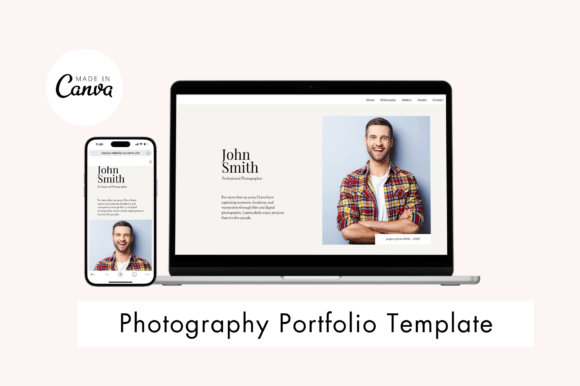
Photography Portfolio Templates: Build Your Brand in Minutes
As a visual artist, your portfolio is your handshake. It is the first impression you make on potential clients, collaborators, and fans. Yet, for many photographers, the technical barrier of web development stands in the way of a professional online presence. You are experts in composition, lighting, and editing, not necessarily in code or complex site builders. This is where Photography Portfolio Templates specifically designed for platforms like Canva bridge the gap. These are not just static mockups; they are fully functional, single-page websites designed to put your work front and center with minimal technical friction.
The Modern Aesthetic of the Single-Page Portfolio
When we talk about the visual personality of these templates, we are looking at a blend of modern typography and clean layout structure. Unlike the cluttered websites of the past, a contemporary Photography Portfolio Template prioritizes whitespace. This negative space acts as a frame for your imagery, ensuring that the visual hierarchy is clear: the photo is the hero, and the text is the supporting actor.
Typically, these designs utilize a mix of sans serif font families for navigation and body text, ensuring high readability across devices. You might see a bold, elegant serif font used for headings to add a touch of editorial sophistication, or perhaps a subtle script font for accents to inject personality. The overall appeal is one of professionalism and intentionality. It signals to the visitor that you care about presentation, which translates directly to how they perceive the value of your photography services. The style is versatile—ranging from minimalist and industrial to soft and organic—allowing you to choose a template that mirrors your specific photographic niche.
Practical Applications: Beyond the "About Me" Page
While the primary function is to host your images, the utility of these design assets extends much further. Because they are editable within Canva, they serve as a dynamic brand identity tool. You aren't just uploading photos; you are curating a digital experience.
- Wedding and Portrait Photographers: You can use the Photography Portfolio Templates to create a dedicated landing page for a specific season (e.g., "Fall Mini Sessions"). By changing the BG Color and elements, you can create a cohesive web design experience that matches your mood board.
- Commercial and Product Photographers: For those pitching to brands, the template acts as a digital leave-behind. You can resize the design to create social media graphics or editorial design PDFs that match the aesthetic of your website, ensuring total consistency.
- Content Creators and Influencers: The "Link in Bio" functionality is crucial here. Instead of a generic link tree, you are directing your audience to a custom-branded page that feels like a premium extension of your Instagram or TikTok feed.
This flexibility allows you to move seamlessly between digital and print. You can use the same template logic to design packaging design inserts for USB drives or client welcome packets, ensuring your brand identity remains consistent from the screen to the physical product.
Mastering the Editable Elements
The true power of these templates lies in their editability. When we discuss "editable" elements, we are talking about total control over the visual hierarchy and mood of the site. You are not locked into a rigid structure.
Typography and Font Pairing:
One of the most common pitfalls in DIY design is poor typography. These templates come with pre-selected font pairing options that have been vetted for legibility. However, you have the freedom to swap these out. If your brand leans towards a luxury aesthetic, you might swap a standard sans-serif for a more refined premium font. If your style is playful, incorporating a handwritten font for headers can change the entire tone. The key is to maintain a consistent typeface usage throughout the page to ensure the user experience feels cohesive.
Color and Backgrounds:
Changing the BG Color is more than just a cosmetic choice; it affects how your photos are perceived. A white background offers a gallery-like feel, making colors pop. A dark or black background creates a cinematic, moody vibe, often preferred for street photography or boudoir. Because you can resize these templates to any dimension, you can test how these color choices work on different canvases, from a mobile screen to a desktop monitor.
Elements and Imagery:
You can remove decorative elements that don't fit your style or add new ones to frame your work. The ability to swap images instantly allows you to keep your portfolio fresh. Unlike a static website built years ago, a Canva-based Photography Portfolio Template encourages regular updates. You can upload your latest shoot, adjust the layout, and republish without waiting for a developer.
Technical Workflow: From Etsy Download to Live Domain
It is important to understand the workflow to maximize the value of these creative font and layout assets. The process is designed to be accessible, even if you have never touched a backend server.
- Acquisition and Link: Once you purchase the template, you receive a PDF containing the unique Canva link. This is your key to the file.
- Editing in Canva: Clicking the link opens the template in the Canva editor. This is where you apply your logo design, upload your high-resolution images, and tweak the color palette. It is worth noting that while the template itself is free to download in various formats (PNG, SVG, JPG, PDF), connecting a custom domain requires a Canva Pro subscription.
- Domain Connection: This is the step that elevates your site from a "Canva design" to a professional "website." Inside the provided documentation, you will find a guide on how to point your domain (e.g., www.yourname.com) to the Canva-hosted page. This ensures that when clients visit your URL, they see your custom design, not a generic landing page.
- Publishing: Once the domain is connected, you hit publish. Your Photography Portfolio Templates design goes live. It is responsive, meaning it adjusts to look good on both mobile and desktop screens, which is essential for modern SEO and user retention.
Evaluating Fit and Professional Polish
When selecting a template, look beyond the preview images. Consider the "personality" of the layout. Does it allow for enough text to tell your story? Does it have a clear call-to-action? A good template balances visual flair with usability. It shouldn't just be a collection of pretty images; it should guide the visitor toward contacting you.
Think about the long-term use. A commercial font license is often included or easily accessible through Canva's library, ensuring you are legally covered for commercial use. This is vital for small business owners and entrepreneurs who need to protect their operations.
Ultimately, using a Photography Portfolio Template is about efficiency. It allows you to apply professional modern typography and layout principles without the overhead of custom development. It gives you a polished, single page professional presence that validates your work and invites engagement. By leveraging these editable design assets, you ensure that your digital handshake is firm, professional, and memorable. You maintain control over your narrative, allowing your photography to do the heavy lifting while the design supports it perfectly.